

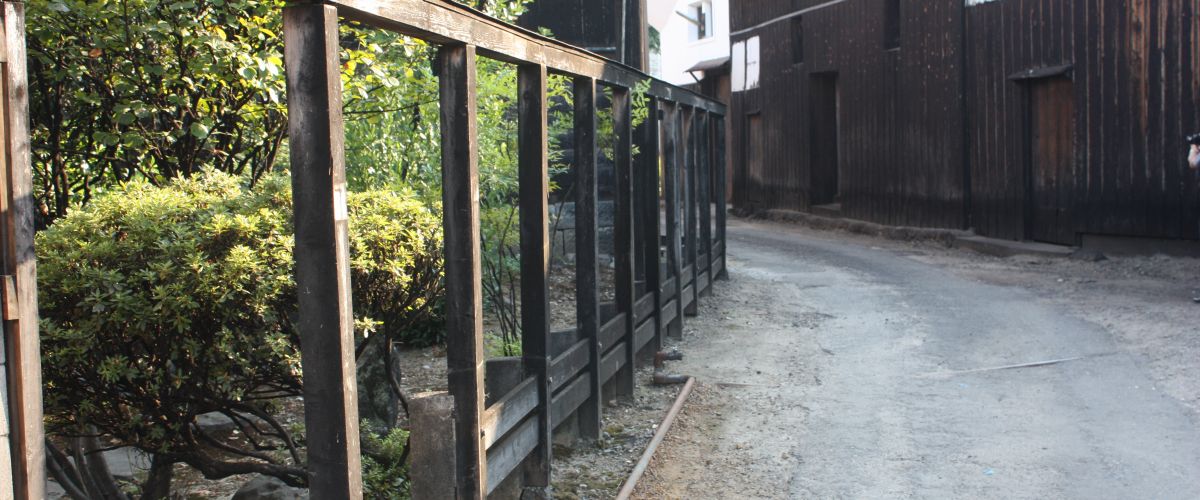
Former Mikuni Kaido Road

The Historic Mikuni Kaido Road
The Mikuni Kaido road was a busy trade and travel route that once connected the center of Honshu (Japan’s main island) to the Sea of Japan. It ran approximately 200 kilometers between Takasaki, a city in present-day Gunma Prefecture, and the coastal town of Teradomari in what is now Nagaoka. Along the way were 35 shukuba (post towns), where travelers could eat and rest at teahouses, stay overnight at inns, change to fresh horses, and contract shipping agents to send goods. In the Edo period (1603–1867), many people traveled such routes, including commoners on religious pilgrimages, merchants heading to distant markets, and daimyo lords in their official processions traveling to Edo (present-day Tokyo).
Teradomari was not only the northern endpoint of the Mikuni Kaido but also a stop on the Hokurikudo road (also known as the Hokkoku Kaido), which ran east to west along the Sea of Japan coast in the Hokuriku region (present-day Fukui, Ishikawa, Toyama, and Niigata Prefectures). The southern endpoint of the Mikuni Kaido, Takasaki, was a stop on the Nakasendo, one of the five centrally administered routes that linked the seat of the shogunal government in Edo to Kyoto, the capital at that time. This made the Mikuni Kaido a crucial route for people seeking to travel even farther on to larger cities.
Teradomari was not only the northern endpoint of the Mikuni Kaido but also a stop on the Hokurikudo road (also known as the Hokkoku Kaido), which ran east to west along the Sea of Japan coast in the Hokuriku region (present-day Fukui, Ishikawa, Toyama, and Niigata Prefectures). The southern endpoint of the Mikuni Kaido, Takasaki, was a stop on the Nakasendo, one of the five centrally administered routes that linked the seat of the shogunal government in Edo to Kyoto, the capital at that time. This made the Mikuni Kaido a crucial route for people seeking to travel even farther on to larger cities.
The Mikuni Kaido in Settaya
Around 1605, the shogunate began to develop the Mikuni Kaido to facilitate shipping from the Sado Gold Mine. The road ran through the Settaya district, which was under the direct control of the shogunate rather than the Nagaoka domain. It is said that daimyo lords in procession to Edo would alight from their palanquins and walk through the section of the Mikuni Kaido in Settaya as a show of deference to the shogun. Residential and road construction from the later Edo period onward has obscured most of the former trade route, but a narrow stretch still remains, connecting several of the district’s centuries-old shops.
The entrance to this segment of the route is located between the Koshi no Murasaki Soy Sauce Brewery and the small Takekoma Inari Jinja Shrine. Beside the brewery building is a stone statue of Jizo Bosatsu, the guardian of travelers, which has been in place for approximately 200 years. The Jizo statue doubled as a road marker, and the base is carved with characters that indicate “Right for Edo, left for the mountain road.” Those traveling down this stone-paved street will notice the distinctive aromas of soy sauce and sake brewing, as well as wooden walls blackened by years of exposure to the mold used in the fermentation process.
The preserved section of the Mikuni Kaido passes several sites that have played a part in the Settaya district’s long history. These include the Koshi no Murasaki Soy Sauce Brewery, the Yoshinogawa Sake Brewery, the well fed by the Tenka Kanro Sen spring, and a road that connects to the Konpira Jinja Shrine.
The entrance to this segment of the route is located between the Koshi no Murasaki Soy Sauce Brewery and the small Takekoma Inari Jinja Shrine. Beside the brewery building is a stone statue of Jizo Bosatsu, the guardian of travelers, which has been in place for approximately 200 years. The Jizo statue doubled as a road marker, and the base is carved with characters that indicate “Right for Edo, left for the mountain road.” Those traveling down this stone-paved street will notice the distinctive aromas of soy sauce and sake brewing, as well as wooden walls blackened by years of exposure to the mold used in the fermentation process.
The preserved section of the Mikuni Kaido passes several sites that have played a part in the Settaya district’s long history. These include the Koshi no Murasaki Soy Sauce Brewery, the Yoshinogawa Sake Brewery, the well fed by the Tenka Kanro Sen spring, and a road that connects to the Konpira Jinja Shrine.