

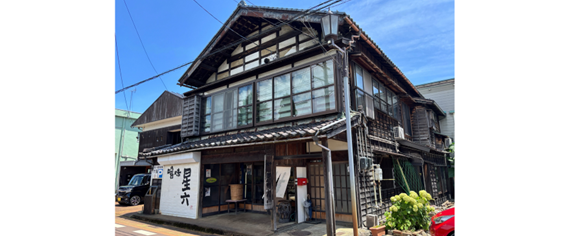
Hoshiroku Miso Brewery
Hoshiroku miso is made using domestic ingredients. Rather than relying on mechanical equipment to shorten the fermentation process, Hoshiroku allows its miso to ferment naturally for years in wooden barrels. This creates a rich, full-bodied flavor that is difficult to replicate using faster methods. The fermentation period affects the taste of the miso and, consequently, the culinary applications for which it is suitable. Customers may consult staff at the shop attached to the brewery for advice on which type of miso would match their cooking needs. Hoshiroku currently sells 15 types of miso, including premium miso, rice miso, barley miso, and Echigo red miso.

Characteristics of Hoshiroku Miso
Hoshiroku miso is made using domestic ingredients. Rather than relying on mechanical equipment to shorten the fermentation process, Hoshiroku allows its miso to ferment naturally for years in wooden barrels. This creates a rich, full-bodied flavor that is difficult to replicate using faster methods. The fermentation period affects the taste of the miso and, consequently, the culinary applications for which it is suitable. Customers may consult staff at the shop attached to the brewery for advice on which type of miso would match their cooking needs. Hoshiroku currently sells 15 types of miso, including premium miso, rice miso, barley miso, and Echigo red miso.
The Miso Storehouse
This two-story storehouse is where much of Hoshiroku’s miso production takes place. Its construction is typical of storehouses in Nagaoka, with steel sheet roofing, plastered walls, and slatted clapboard siding around the lower half of the exterior. It was originally built in the late nineteenth century as part of the Hoshino Honten business and was used to produce soy sauce. It was moved and converted into a residence when Hoshino Rokuro started his own branch of the family. In 1918, it was moved again to its current location and converted once more to produce and store miso as part of the Hoshiroku brewery. Viewing the storehouse is only allowed from the outside to avoid disturbing the fermentation process happening within. The storehouse is a registered Tangible Cultural Property.